As the weather is getting nicer here in the Midwest and the school year is ending, many folks are planning weekend getaways and vacations. While making your plans don't forget to include a few simple ways to protect your home and possessions.
We see all kinds of tips on how to protect your home from thieves - put lights on timers, stop your mail (USPS.com) and your newspaper, have someone mow your yard, make sure your garage door is closed (yes we have come home from day trips and the garage door has been wide open!) but have you considered other, preventable losses?
Small appliances including coffee makers, toasters, flatirons and curling irons left plugged in (even when switched off) can cause a fire. Take a few extra minutes to make sure everything (including TV's and all the attached players,) are unplugged. Not only will this protect your home from fire but it will also protect all these items from possible lightning damage.
Do you shut your water off? Ask ANYONE that has experienced a water leak from any appliance or pipe- it gets nasty quick. Not only does it ruin your flooring, sub floor, any cabinets it comes in contact with, it gets moldy and smelly pretty darn quick. Take the extra few minutes to shut your water off where it comes into the house, then starting at the highest point in your house, flush the toilets, turn on all the faucets and work your way down to the lowest spot in your house. Some folks even drain their water heater and shut it off, we don't but our water heater is in the basement and right by the floor drain.
Fell free to share any additional tips you have.
Wednesday, May 6, 2015

Tuesday, September 9, 2014
Homeowner's Insurance Underwriting - Part 3
The Appearance
of your home and premise and why it affects your insurance.
Your home’s
appearance and physical condition play a large role in underwriting insurance. Property and premise that are not maintained have a higher risk of loss and many carriers will deny coverage
based solely on the condition of the home and premise.
A roof that is in
poor condition will leak and can cause major interior damage to the home.
Missing or loose gutters and downspouts, and missing soffit and
fascia can also allow water into the home, resulting in mold and mildew that
can grow unseen until the health of the residents becomes affected.
Cracked
sidewalks, stairs without proper handrails and porches or decks without solid
railings can result in personal injury. Too many items in your yard, broken
fencing, an old shed that needs to be torn down, are also things that can cause
coverage to be denied.
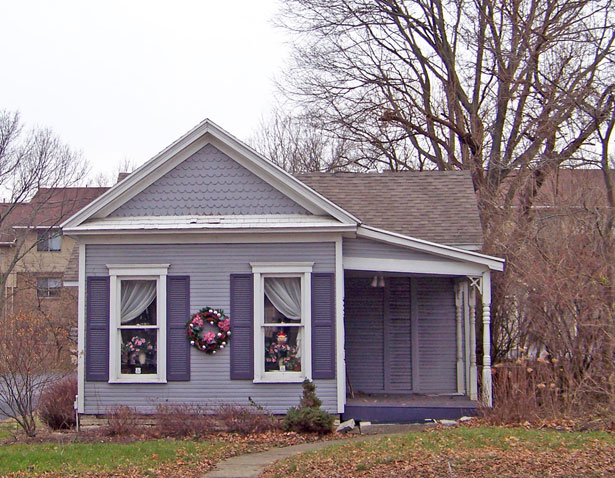
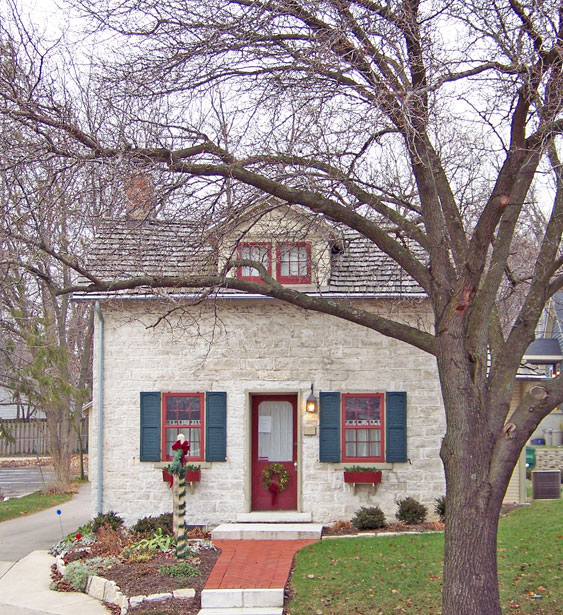
If the underwriter is on the fence about writing an account, pictures of a well maintained home may be enough to sway the decision.
 |
| Photo credit |
 |
| Photo Credit |
Put yourself in the underwriter's shoes. If you could make an exception, which house would you be more likely to say, "Yes, I am willing to take a chance with this account." and why?
Friday, August 1, 2014
Homeowner's Insurance Underwriting - Part 2
The
Location of your home and how it affects your insurance.
The General Area of the Country:
Different areas
of the country are affected by man-made and natural disasters. Brush fires are a
large concern in the Western United States as are mudslides and earthquakes.
Tornado Alley stretches across the Midwest. The Eastern and Golf coastal areas
are prone to hurricanes and storm surge. Flooding can happen anywhere,
especially along rivers and lakes. High crime areas in cities, large and small.
Sink holes and areas with past or present underground mining activity. These
influence your premiums and even the availability of some coverages in a
homeowner’s insurance policy.
Fire Protection:
Fire protection
plays an important role in underwriting a home insurance policy. Most fire departments
have a Fire Protection Rating of 1 (the best) – 9 (very limited protection.)
These are not randomly assigned by underwriting, Insurance Services Office, Inc (ISO) is the leading provider of FPR for the
United States. Many insurance companies use the ISO rating and guidelines to
determine eligibility and premiums.
What are the
basic guidelines in determining the FPR for your home? Is the home located
inside city limits? If so, it will have the same FPR as the city fire
department. Burlington IA is a 4. If the home is located outside city limits
but within 5 miles of the responding fire department and there is a public fire
hydrant within 1000 feet then the home receives a rating 1 FPR higher than the
fire department. If the home is within 5 miles of the responding fire
department but over 1000 feet from a public hydrant it would receive an 8B or
9. If it is over 5 miles from the responding fire department it would receive a
10 (no recognized public protection.)
In areas outside
of city limits it is important to know who the PRIMARY responding fire
department is. Make a phone call (not 911) to the nearest fire station to make
sure you know the answer.
Response time is
also a factor in this equation. How long does it typically take the fire
department to arrive on scene from the time the first 911 call is received? If
it is a volunteer fire department, the firefighters have to get to the station,
get geared up and get the equipment on the road. Response time can be
lengthened by 5 - 10 minutes. A fully loaded truck is not as maneuverable as a
passenger vehicle so it takes longer for them to arrive on scene than road
miles would indicate. What about water to fight the fire, without a hydrant
nearby, water must be brought in and replenished. Fire departments are finding
better ways to get more water on scene but it still needs to be hauled in,
which takes manpower, equipment and time away from fighting the fire.
I mentioned
Mutual Aid Agreements in the first post. Mutual Aid Agreements are quite common
in our area. They provide for one or more nearby fire departments to respond to
help fight fires, or cover calls that come in when the primary department
is on another call. Most often the primary fire department has to request
mutual aid.
Other Factors:
I have spent a
lot of time on fire protection but other factors that are considered are the proximity
of neighbors and the visibility of your home. If your neighbors are fairly
close and can see your home, they are more likely to notice if there is unusual
activity at your home when you are gone; helping protect you from theft, or smoke; indicating a possible fire.
A Homeowners
policy is NOT designed to provide coverage for most commercial, farm or
business activities on your premise. There is limited business property
coverage and generally no liability coverage provided. Many carriers limit the
number of acres they will extend coverage for. NEVER assume you have coverage
for these without consulting your insurance agent. Depending on the exposure
you may be able to endorse your policy to provide coverage. Or you may need to
secure a commercial or farm policy to cover these exposures.
Trampolines and
pools: Personally, I would kill for a pool in my backyard. But I also have a
lot of trees so rather than spending most of my time skimming, I have no pool. But,
if I did decide to have one, I would have to make sure to abide by my city
ordinances, make sure my insurance carrier was aware of it and that it would
pass the underwriting guidelines. Some
carriers require you to sign an exclusion - meaning they provide NO LIABILITY/
MEDICAL or PROPERTY DAMAGE, you may become liable for resulting from
ownership/care, custody or control of a pool or trampoline. Some carriers have
certain guidelines that must be met – fencing, alarms, locks etc. before they
will accept your application or continue your coverage. Other carriers will
decline your application or non-renew your coverage if the item(s) do not meet
underwriting guidelines or are not removed and/or you sign an agreement to not
replace them. Consult with your agent
BEFORE you buy a trampoline or pool.
Ponds and creeks are often found on rural acreages in our
area, while they are not generally a reason for a policy to be declined, the
carrier should be informed that they are there.
Wednesday, July 16, 2014
Homeowner’s Insurance Underwriting - Part One
Insurance underwriting is all about risk – many factors go into the premiums carriers charge besides how much coverage is provided and what deductible is selected.
The Home and any Other Structures:
Facts:
Original Year of Construction. What type of construction is it? What is the total square footage? Is it a high value home - generally over $750,000?
Updates:
When were the major systems updated (completely replaced) – roof, electrical including the breaker box, plumbing, HVAC? Has the electrical service into the home been replaced – is at least 100 amps?
Other Considerations:
Have there been any losses in the last 5 years?
Are all buildings used only for personal use?
Location:
Property located
in high risk areas may not be eligible with many carriers. Natural disasters
aside, what do underwriters look at:
Fire Protection:
How far is the property from the first responding fire department? How long would it take for the fire department to arrive, and is there access to an adequate water supply. What firefighting equipment do they have – pumpers, ladder trucks, tankers, etc. Is there a Mutual Aid Agreement? Is the department manned by paid staff or volunteers?Other Considerations:
How far away are
the closest neighbors? Can they see your home?
How many acres
are included/do you own. Is there any farming or business/commercial use of/on
the land? Any swimming pools, trampolines, ponds, creeks or other hazards?
Appearance of the property:
Underwriters consider the overall appearance of the property.
Maintenance, upkeep, and general housekeeping of the outside and interior premises are indicators of physical hazards that the insurer may not want to accept or hint to broader problems with a prospective insured.
Personal
inspection and photos help relay a true picture of the risk. Consideration of
moral and morale hazards, or lack thereof, can be supported through the use of
photos.
Poor maintenance
of a property will often make the property ineligible for coverage with many
carriers and the owner will have to seek coverage with a high risk carrier,
resulting in higher premiums and possibly less comprehensive coverage.
Your History:
Previous Insurance Experiences:
Have you had
previous insurance – some carriers require previous homeowner’s insurance –
either having lived with your parents or a renter’s insurance policy for first
time home buyers. Have you had any losses at other locations in the last 5
years?
Personal Information:
What is your credit score/history?
Have you been convicted of insurance fraud and or a felony?
Are you a public figure?
Pets and unusual exposures:
Do you own or are
you planning on acquiring any exotic pets or a dog with a bite history or breed
with aggressive tendencies; i.e., Pit-bull, Chow, Akita, Rottweiler, Doberman,
Husky, Malamute, Wolf or mixture with any of these breeds (this is only a
partial list of breeds that may be ineligible.)
Do you have a home-based business?
Some items on the
list are pretty common sense, but why does an Underwriter care what the house
construction is? I asked one of my underwriters why his company would not write
a log home – MOST homeowner’s policies are written on a replacement cost basis.
Two homes each valued @ $300,000 have exterior damage from a grass fire…. on a
house with vinyl siding, they replace the damaged siding or worse-case scenario
have to reside the whole house. On the log home, they have to rebuild the whole
house because there is no way to replace just a few logs. So instead of a $10,000 claim the owner of
the log home has a $300,000 claim.
Future blogs will look at these in more depth.
Wednesday, April 30, 2014
Premise and Dog Liability - Does Posting a Warning Sign Protect Me?
SIGNS, SIGNS, EVERYWHERE THERE
ARE SIGNS!
 Garage
Sales, Tag Sales, Yard Sales, no matter how you refer to them, the season is upon
us! Most of us have a “few too many
things”; outgrown/outdated clothes and things we no longer want or use and the opportunity
to make a buck and have the items gone is the perfect reason to plan your sale.
Garage
Sales, Tag Sales, Yard Sales, no matter how you refer to them, the season is upon
us! Most of us have a “few too many
things”; outgrown/outdated clothes and things we no longer want or use and the opportunity
to make a buck and have the items gone is the perfect reason to plan your sale.
There are household’s that run continuous yard sales around here, so the argument could be presented that it is a business rather than a “personal” venture. If this situation applies, I advise you to consult with your insurance agent to determine if you need and can purchase coverage for a “home business.”
As people
are preparing to hold a sale, we often take calls about posting “Not Responsible
For Accidents” and “Beware of Dog” signs. "Are they a good or bad idea? Do they “really” absolve me of liability?"
Personally,
my thought has always been – You invited these people onto your property when
you placed the ads and/or put the sign out by the street – good luck trying to
get out of a lawsuit if someone trips over your cracked sidewalk or the
extension cord you have stretched out to the calculator and gets badly injured. As for Sneakers nipping a patron - that Beware of Dog
sign – isn’t worth the paper it is printed on.
BUT... is that fact or fiction?
 In 2009 the
Iowa Supreme Court (Koenig v. Koenig, 766 N.W.2d 635, 645-646) adopted a
multi-factor approach for determining whether a land owner would be liable for
injuries on his property:
In 2009 the
Iowa Supreme Court (Koenig v. Koenig, 766 N.W.2d 635, 645-646) adopted a
multi-factor approach for determining whether a land owner would be liable for
injuries on his property:
"We
impose upon owners and occupiers (of land) only the duty to exercise reasonable
care in the maintenance of their premises for the protection of lawful
visitors. Among the factors to be considered in evaluating whether a landowner
or occupier has exercised reasonable care for the protection of lawful visitors
will be: (1) the foreseeability or possibility of harm; (2) the purpose for
which the entrant entered the premises; (3) the time, manner, and circumstances
under which the entrant entered the premises; (4) the use to which the premises
are put or are expected to be put; (5) the reasonableness of the inspection,
repair, or warning; (6) the opportunity and ease of repair or correction or
giving of the warning; and (7) the burden on the land occupier and/or community
in terms of inconvenience or cost in providing adequate protection."
This does not mean that visitors get a free pass; Property owners/occupiers are not "absolute" insurers or guarantors. Visitors are to exercise
reasonable care to observe and avoid dangerous conditions. Some situations will
excuse visitors from noticing a dangerous condition, if the property owner is
responsible for distracting the visitor's attention to possible dangers by
drawing the visitor’s attention to other items such as goods for sale.
The Iowa law
of comparative fault applies to premises liability claims. Therefore, a visitor
who is injured by an unsafe property condition who is partly responsible for
his injuries may have his right to collect damages reduced or barred.
The law will
hold the property owner responsible for premises liability if they were aware
of the dangerous condition and did nothing to correct it. They can also
be liable if it was obvious that the owner should have known about a potential
hazard and did not take steps to prevent injury.
I was not
able to find anything specific to “Not Responsible For Accidents” signs being
posted, but after my research I still feel the best thing would be to make sure the area being used for
the sale is made as safe as possible and that it is clearly defined so people
don’t decide to “wander around.” If you
feel the need for signs – post them.

In Iowa, the owner of a dog is liable for all damages
done by the dog …. See Iowa Code Section 351.28. There is no “Free Bite” rule. Posting a Beware of Dog sign is NOT going to
absolve you of liability.
My advice,
keep your dog inside your home, in its kennel and away from all patrons. Even the cutest, most even tempered dog can get frightened by a flash of light, a strong smell or even a shrill voice and nip.
If you are a renter, these same rules apply to you. While your landlord is normally responsible for the maintenance of the property, when you invite people onto the property you may be assuming some liability.
When you have questions about your policy coverage, you should never hesitate to call your agent. Most agents understand that insurance can be complicated and encourage their clients to call with questions. If you are not comfortable calling your agent, it might be time to find a new agent - CALL us!!
Monday, April 28, 2014
Your Home Insurance and a Fallen Tree
This is the sight that greeted me a couple of weeks ago as I was getting ready to head out to do some grocery shopping. One of our Mulberry trees decided to give it up - its roots just could not hold in the soil on the edge of the ravine.
We take a few calls every year about how fallen trees are or are not covered by a homeowner's insurance policy.
What is your best guess in this situation?? Would my insurance cover having this tree removed?
 |
Looking out my front door!!! |
.jpg)
The GENERAL rule is that the tree has to have caused some damage to a covered structure for the homeowners policy to kick in. NOPE - no structure damage, it didn't even pull down the power line; in fact we didn't even hear it fall!! Remember the flat line winds last year - took out the top of one of our biggest trees and numerous limbs on it's neighbor on its way down. It made a big mess and took us all day to clean it up and since (THANKFULLY) it did not damage our house, there was no coverage from our home insurance. So yes, even insurance people have with the same policy coverage!
HOWEVER:
It is blocking access to our home - even our Yaris wouldn't fit under it!! So yes, I could have called in a tree surgeon, had them cut it up, paid my deductible and called my insurance company on Monday.
Instead - we borrowed our neighbor's chainsaw and spent a few hours cleaning it up ourselves. Mind you, I am NOT promoting an inexperienced person run out and beg, borrow or buy a chainsaw and begin cutting away on a fallen tree - my husband has been cutting trees for a lot of years and has a lot of respect for the odd twists and pops a branch can take.
Thursday, April 3, 2014
How Much Life Insurance Do I Need?
There are three categories you need to consider when trying
to determine the minimum amount of life insurance death benefit you and /or your spouse need: YOUR INCOME,
YOUR EXPENSES, YOUR ASSETS.
YOUR INCOME
What is the
annual income your family would need to maintain their current standard of
living?
(60% - 70% of total income is
usually required.)
Keep in mind, additional money
needed to pay for someone else to do the things you do to help care for your
family – group health insurance, take children to appointments and other activities;
household maintenance – laundry, cooking, cleaning, mow the lawn, etc.
A spouse that stays
home and provides for the everyday needs of the family may not provide “income”
but how much would it cost to hire a full time, live-in caregiver?
Other annual income (Social Security, Spouse income, etc.)
your family would receive?
How many years do you want to provide this income?
YOUR EXPENSES
Estimate
your Final Expenses – funeral, medical expenses, etc.
Outstanding debt including your mortgage, credit cards and
other loans.
Total
college expenses for your children.
(Average based on the 2009-2010
The College Board:
Private College $156,112, Public in
State $77,522, Public out of State $123,664)
YOUR ASSETS
Savings,
investments, etc.
(Money markets, CD’s, Stocks, bonds
mutual funds, etc.)
Retirement
savings accounts
(IRA’s,
401(k)s, pension and profit sharing plans)
Current
Amount of Life Insurance
(include group insurance as well as
individually owned insurance)
You can find many life insurance needs calculators on the
Internet – look for one that has built in inflation and cost of living
adjustments.
Once you have an idea of the amount of coverage you need,
contact your life insurance agent to review your coverage and find the best
options to meet your needs and your budget.
Subscribe to:
Posts (Atom)